Elivate Ltd has been using drones as part of our marketing activities to provide our clients with a finished internal and external video of the works on their project and also to support structural surveys when there is an issue on the roof or difficult-to-reach areas for a number of years now.
But recently we have used one of our Carpenters, (who has used his own drone) to support us on a project in Croydon. Our client has been renting out this property for over 20 years and decided to have a full refurbishment and modernisation of the property to help improve the rental value and provide accommodation for his children when they go to university.
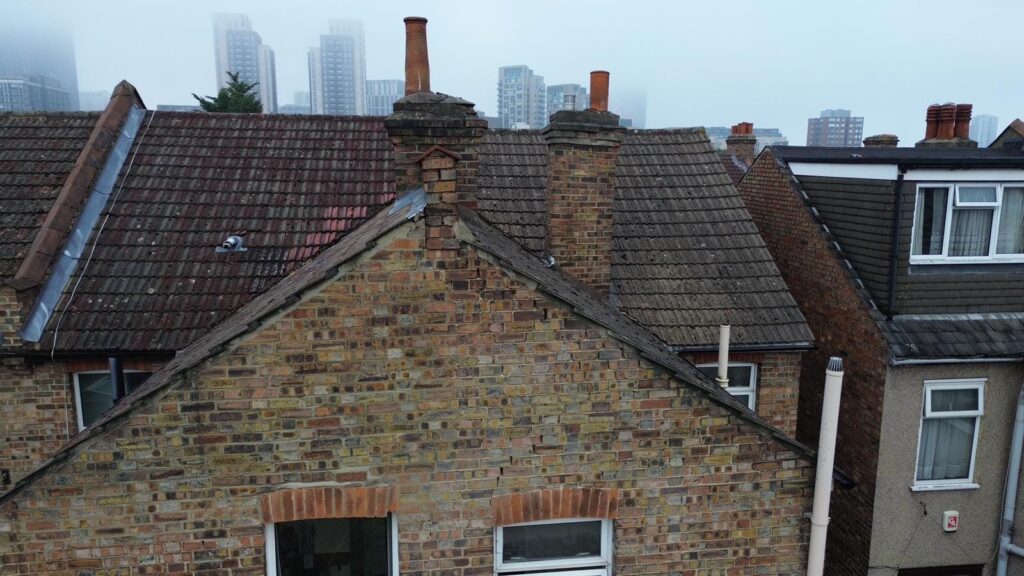
We could see internal signs of structural movement but the opportunity to get a drone up and over the roof, to take some close-up images of the roof, the chimney and some of the supporting walls, gave us the added advantage of seeing the impact of the movement without the expense and time of getting in scaffolding.
This particular drone survey (photos attached) provided us with the supporting evidence we needed to recommend to the client: the removal of both chimney stacks and chimney breasts. We were able to share these images with the adjoining neighbour and provide them with the information they needed to decide about the shared chimney between the two properties. Although scaffolding will now be needed to remove the chimneys and repair and re-tile that area of the roof, this may not have been the case, and this could have saved our clients a significant speculative outlay initially.
Using a drone as part of any project requires the drone pilot to follow certain guidelines, so we wouldn’t just suggest anyone takes off and starts to take images over a house, without seeking the right permissions.
Before you fly a drone in the UK you must register with the CAA and there are two guidelines you must follow: if you are flying a drone (or a model aircraft) you must take and pass a theory test and get a flyer ID and if you also own a drone (or a model aircraft) you will need to register for an operator ID. (The only reason you would not register is if the drone is lighter than 250gms and doesn’t have a camera).
There is also a code you must follow, and this provides you with criteria as a pilot/operator. There are serious fines and possible prison sentences if you fly a drone illegally, so reading up on the code and using a registered operator is essential to keeping on the right side of the legal system.
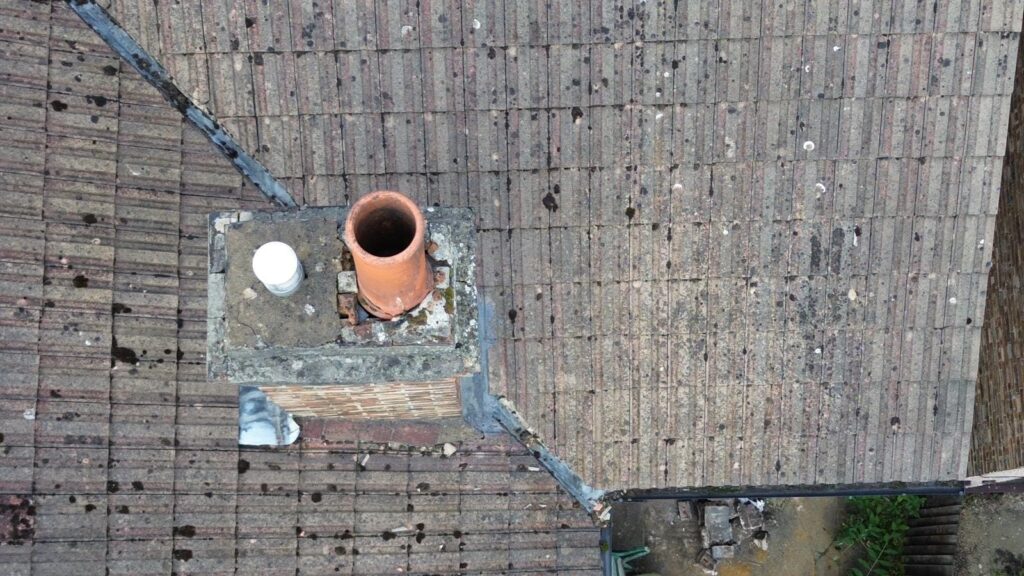
If you are looking for a builder with an experienced internal team, who is confident in using drone technology and interpreting evidence collected from the images taken, get in touch. We have an in-house structural engineer who will review the footage and provide you with a report on the work needed.